Byrne Hall

Byrne Hall
The Academy building was turned over to DePaul University, and renamed Byrne Hall. Bygone DePaul | Special Collections & Archives

Introduction

About the DePaul Emeritus Society

DePaul University values its ongoing connections with its faculty and staff retirees, as it values their past contributions to the university’s mission. The DePaul University Emeritus Society was founded in 2008 with the merger of the Staff Emeritus Society and the Emeritus Professors Association. The Society is sponsored by the University’s Office of Mission and Values.

The purpose of the DePaul Emeritus Society is to provide a means for ongoing connection, communication, and socialization between the university and its emeritus faculty and staff, and between individual retirees whose professional lives were for so many years dedicated to university service.

Photos, events, and information of interest to members of the DePaul Emeritus Society will be posted to this blog. Please take a look, add your comment, offer to be an "author" or just enjoy.
Showing posts with label Book Club. Show all posts

Saturday, December 18, 2021

Book Club December 1

 About a dozen members of the Book Club convened on Zoom to discuss Angle of Repose, a long, complex novel dealing with a marriage and the struggles of an engineer and an artist in the harsh environment of the western states.  Some found it “depressing” or even “confusing.” while others admired Stegner’s skills in structure and style, finding his characters sympathetic and the narrative engaging.  Some of these differences centered on Stegner’s use of a limited narrator, Lyman Ward, who researches and recounts the life of his grandmother Susan; especially in view of Lyman’s strong opinions and the dream fantasy at the end of the novel, we might distrust some of his judgments.  Readers’ responses to Susan ranged from impatience with her social snobbery and her decision to marry Oliver Ward (a “consolation prize?”) to sympathetic admiration for her strength and courage in the difficult circumstances of western life.  Lyman views her sympathetically but never defends or excuses her possible involvement with Frank; he is notably evasive about the nature of their relationship and perhaps also condescending towards her work as an artist.
 Several readers were interested in Stegner’s use of the Foote family letters and noted that many letters were used almost verbatim; perhaps these added to the sense of history, of real life, in the novel.  There was general agreement that Stegner’s narrative style was eloquent, particularly in rendering the visual splendor and the harsh reality of life in the western states.   One reader added that the novel’s treatment of life in the small town and cities of Idaho and California revealed that the exploration and settlement of the West was not only the work of brave individualists, but was controlled and exploited by large Eastern corporations and unscrupulous lawyers and investors—like the lawyer who cheats Oliver out of a homestead.  Altogether, the novel’s scope and style help to explain Stegner’s literary awards and staying power, even if some readers “admired rather than loved” the novel.  Despite its multiple stories,  Angle of Repose makes a determined march towards tragedy; after Agnes’s death Oliver and Susan can never recover their trust and happiness, and even their son appears withdrawn and cold.  One reader pointed out that Lyman’s final lines consider forgiveness, something greater than his grandfather was capable of, and thus end the novel with the possibility of redemption or healing.


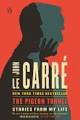
Our next book will be John LeCarre's memoir The Pigeon Tunnel: Stories of my Life. Next meeting willbe Wednesday, February 2, still on Zoom. Discussion starts at 11 am, with link open at 10:30 for log on and chat. Please contact Kathryn DeGraff or Helen Marlborough with any questions.

Saturday, October 30, 2021

Book Club October 6

A group of about a dozen readers met to discuss Stephen Johnson's The Ghost Map. We found many areas of interest in Johnson’s account of John Snow’s efforts to pinpoint the causes of a cholera epidemic in 19th century London.  One obvious and widely shared response was a horrified awareness of the limits of 19th century sanitation and the dangers it posed to public health.  Johnson also provided a wealth of accompanying detail on living conditions and popular ideas; in fact, some readers found the second half of the book overloaded with “scattershot” detail that interrupted the narrative. Others appreciated Johnson’s analysis of issues, such as his lively account of a cholera infection or his explanation of popular resistance to Snow’s claims because of the belief in miasma or poisoned air.   One reader noted that we might have learned more about the media and transmission of information in this society, while others recognized Snow’s vivid demonstration in his map of fatalities near the Broad Street pump.  Johnson also notes the persistent human tendency to blame the poor or lower classes for their own illnesses, as many believers in miasma did.  The linkage of illness to “weak morals” has been documented in other places as well; Johnson gives a good account of the social dimensions of public health issues.  We also discussed Johnson’s perhaps optimistic view of the possibilities of urban life; discoveries like Snow’s help to alleviate the risks of life in crowded urban areas, but public health efforts, as we know, face many challenges.

The next meeting,  December 1, will focus on a work of fiction.  The group selected Wallace Stegner’s Angle of Repose for this meeting.  As we agreed in August, our February meeting will discuss John LeCarre’s memoir The Pigeon Tunnel. We will continue to meet on Zoom in December and we eagerly welcome new members. The Zoom link will be sent prior to the meeting, we open the link at 10:30 with the discussion beginning at 11 am Central Standard time. If you have questions or suggestions, please contact either Kathryn DeGraff or Helen Marlborough.


Wednesday, August 25, 2021

Book Club August 4

 About a dozen Book Club members met to discuss Britt Bennett’s novel The Vanishing Half, exchanging thoughts on a number of topics literary, historical, and social.  One reader noted at the start that the novel might well have been titled “Passing,” because its central characters were attempting to “pass” as members of another race or sex; in that reading, Stella and Rees are particularly important, “passing” by huge efforts in social behavior or even surgery, and their characters are developed in depth; but in another sense the entire town of Mallard, with its preference for light skin, attempts to pass as racially other.  Other readers commented that these transformations are also “vanishings” because old identities are left behind or disappear; and when Desiree flees from her abusive husband, she too vanishes, absorbed back into the town she left as a teenager.

These reflections led to a number of comments on the pervasive racism of American society and the traditional themes of American identity.  The inter-generational trauma of racism finds violent expression in the brutal murder of the twins’ father, for example, and helps to explain Stella’s fears of discovery and Kennedy’s unfocused resentments.  All the characters seem to be engaged in the traditional American quest to discover or shape a new identity, free from the constraints of the past, but all these quests are shaped by the stresses of racism and oppression. Still, a few characters, such as Jude or Earl, accomplish their goals and represent the strength and integrity possible within (and beyond) Black communities.

Some readers noted weaknesses in the novel’s structure or style; in an effort to cover a number of current issues and locations, Bennett sometimes leaves characters and situations undeveloped: Stella’s husband seems a stereotype, for instance, and Stella’s black neighbors might deserve more treatment.  On the whole, however, the novel raised important questions about current American culture and exposed the high costs of racism in America, whether to individuals or to the culture as a whole.


Our next book will be
The Ghost Map by Stephen Johnson. We will meet on Wednesday, October 6, at 11 am Central Time, via zoom. The link will open at 10:30 to provide for some connecting time prior to the book discussion. If you have any questions, please contact Kathryn DeGraff or Helen Marlborough.

We enjoy catching up with our fellow retirees and we welcome new members to the group. These zoom meetings have provided a great way for us to connect virtually with local and distant DES members.


Monday, June 21, 2021

Book Club June 2

 Most members of the DES Book Club enjoyed McCullough’s detailed, wide-ranging account of Americans in Paris from the 1830s to the close of the nineteenth century.  Many readers commented on McCullough’s easy, graceful style; they were impressed also by his thorough research and his use of sources like letters and diaries to illuminate the individual lives of his American subjects.  And of course they were impressed by the range of fields this work covers—medicine, technology, art, literature, and the many Americans who were transformed by their studies in Paris. In particular, the accounts of artists were vivid and compelling.  A few readers felt that the work covered too much detail, so the effect was scattered; they felt McCullough had assembled material without achieving a unified narrative with an “arc” or controlling idea.  But in general there was admiration for McCullough’s achievement and his ability to convey the energy and wonder of these encounters with Paris.  We all agreed that the paperback would benefit from better maps, especially to encourage an understanding of the extensive changes in Paris during these years. 

At the close of the meeting, Nancy Rospenda reminded everyone to send her any contributions to the newsletter—especially accounts of how we spent the year of the pandemic.  Contributions should reach her by June 30 for the next issue of the newsletter.


Our next book will be The Vanishing Half by Brit Bennett. Our next meeting will be August 4 at 11 am, Central Daylight Time. The zoom link opens at 10:30 to permit everyone time to connect and say hello. If you have any questions, please contact Kathryn DeGraff or Helen Marlborough.

We enjoy catching up with our former colleagues and enjoy welcoming new members to the group. Zoom meetings have provided a great way for us to connect virtually during this time.


Sunday, April 18, 2021

Book Club, April 7

Opinions were divided during our discussion of Ann Patchett’s The Dutch House. Some readers responded enthusiastically to the rich characterizations and family dynamics in the novel, while others found the characters’ obsessions with the house itself a puzzle or a limitation.  Our conversation started with an observation that the novel is narrated entirely by Danny Conroy, yet it is dominated by women and their concerns.  We considered the relationship of sister and brother, Maeve and Danny.  Maeve’s insistence that Danny attend medical school, to spend down the inheritance that would otherwise go to the children of Andrea, their stepmother, seems an elaborate kind of vengeance.  While the banishment of Maeve and Danny by their stepmother from the house (and Maeve’s response) seemed rather unconvincing to many of us, others saw it as one of many borrowings in the novel from fairy tales; at various points, the novel seems to echo tales of wicked stepmothers, children left to find their way in the forest, and magical castles.  

The Dutch House itself evoked a range of reflections and comments.  The role of the large front windows, both architecturally and as an ironic “transparence,” led to observations about actual Dutch houses and the odd presence of the original Dutch inhabitants through their portraits and possessions.  The servants who seem almost part of the furnishings, starting with Fluffy, were all richly drawn and interesting in themselves.  Andrea’s obsession with the house, and Maeve’s persistent return to watch the house from outside, suggested its power. Only when a party given by the new owner, Danny's daughter, celebrates new beginnings, does the house appear to have found its rightful owner.  The family, despite Maeve’s death, also appears more coherent in those final scenes, though the novel’s ending remains ambiguous.


Our next book will be The Greater Journey: Americans in Paris by David Mccullough. We will meet via Zoom on Wednesday, June 2. Meeting starts at 11 am Chicago time. However, the Zoom link will be open at 10:30, to make sure everyone can  establish a good connection.

Please contact Kathryn DeGraff or Helen Marlborough if you have any questions.

We enjoy catching up with our former colleagues and enjoy welcoming new members to the group. Zoom meetings have provided a great way for colleagues not in the immediate vicinity of the Lincoln Park Campus to participate. 

Sunday, February 21, 2021

Book Club February 3

 We had a lively discussion of Caste. Many found the work powerful and compelling, but less informative than Wilkerson's earlier The Warmth of Other Suns. We applauded her use of compelling personal stories and analogies that lent force to her analysis. Her comparison of the problem of caste as the weak foundation of the house of American society helped highlight the need to confront and understand systemic racism. And the account of the black schoolboy denied the use of the local swimming pool brought home the thoughtless cruelty of racist culture. Some noted problems with the parallels drawn between the Nazi "final solution", the Indian caste system, and American racism, seeing critical differences between these three systems. Others noted that the term "caste" could equally apply to ethnic distinctions and was used too broadly here. We identified some instances of superficial source material, but agreed that the younger readers could read and learn from Caste. We agreed that all readers could take away valuable lessons and new awareness from this work.


Our next book will be The Dutch House by Ann Patchett. We will meet via Zoom on Wednesday, April 7. Meeting starts at 11 am. However, the Zoom link will be open at 10:30, to make sure everyone can  establish a good connection.

Please contact Kathryn DeGraff or Helen Marlborough if you have any questions.

We enjoy catching up with our former colleagues and enjoy welcoming new members to the group. Zoom meetings have provided a great way for colleagues not in the immediate vicinity of the Lincoln Park Campus to participate. 


Sunday, December 13, 2020

Book Club December 2

Our discussion of Pachinko  covered several topics, following the saga of a Korean family from the annexation of Korea by Japan in 1910 through 1989. We got a sense of the lives of Koreans under Japanese rule in their own land as well as their place as second class citizens in Japan to this day. The story is that of a struggle for survival, but includes issues of caste, racial prejudice, survival during war, and the role chance has in individual lives. While covering these and other topics, the story centers on Sunja and her extended family and the relationships which both support and destroy individual survival. Sunja and her sister-in-law use their skills as cooks and their limited resources to survive by selling food. Sunja’s secret, the identity of her son Noa, becomes both a resource and a burden. Noa’s suicide centers on his struggle to accept his Korean identity in a Japanese world. The game of pachinko is both a thematic motif evoking chance and hope, as well as a means of employment and survival for Koreans in Japan.  We enjoyed our wide-ranging discussion of Pachinko, and ended before we had managed to cover everything the book brought up.


Our next book will be Caste by Isabel Wilkerson. We will meet via Zoom on Wednesday, February 3. Meeting starts at 11 am. However, the Zoom link will be open at 10:30, to make sure everyone can  establish a good connection.

Please contact Kathryn DeGraff or Helen Marlborough if you have any questions.

We enjoy catching up with our former colleagues and enjoy welcoming new members to the group. Zoom meetings have provided a great way for colleagues not in the immediate vicinity of the Lincoln Park Campus to participate. 


Thursday, October 29, 2020

Book Club October 7

 After Visiting Friends provided many topics for discussion at our October meeting. Several members of the book club especially enjoyed Michael Hainey’s detailed portrait of Chicago in the 1950s and 60s, recalling their own childhood experiences of the city.  Others praised the accounts of newspaper work, both the newsroom itself and the camaraderie of the men who staffed it, noting also that Hainey’s parents met there. Hainey’s training as a news reporter is apparent both in his determined search for the truth about his father’s death and in his direct prose style.  Although some readers faulted the memoir’s style, finding it undistinguished or shapeless, others found it forceful.

As in our reading of other memoirs (such as Educated), we disagreed about the effectiveness and “truth” of some remembered scenes, including Hainey’s imagined recreation of past scenes from others’ hints.  Thinking about memory and the past led the discussion back to Hainey’s intense need to know his father—we considered the appeal of family history in general—and the resolution of Hainey’s search in his realization of his mother’s love and courage.  The narrative arc of the memoir is completed in that final recognition and tribute to Hainey’s mother.


Our next book will be Pachinko by Min Jin Lee. We will meet via Zoom on Wednesday, December 2. Meeting will start at 11 am, however, the Zoom link will be open at 10:30, to make sure everyone can get establish a good connection.

Please contact Kathryn DeGraff or Helen Marlborough if you have any questions.

We enjoy catching up with our former colleagues and enjoy welcoming new members to the group. Zoom meetings have provided a great way for colleagues not in the immediate vicinity of the Lincoln Park Campus to participate and renew old acquaintances!


Thursday, August 20, 2020

Book Club August 5

We came away from our discussion of The Night Watchman with new awareness of and respect for Native American lives. We noted Louise Erdrich’s ability to capture and convey Native American beliefs and the realities of reservation life—its family bonds, its poverty, the government schools. Her vivid treatment of magic and folklore, and its suggestion that what we might call “superstition” depends a good deal on one’s perspective was reflected as well through the comic illustration of cultural assumptions by Mormon missionaries about what’s real.  Erdrich wove together several story lines in different modes—the Night Watchman’s verbal battle with the U.S. government, Pixie’s surreal experiences in the “nightmare” city as she searches for Vera, the story of Wood Mountain’s boxing and his changing feelings, expertly. But she always kept the central focus on the novel on the actual story of her grandfather and his struggle to maintain Indian lands and identity granted by federal law against the 1953 congressional act that would “terminate” them.


Our next book will be After Visiting Friends  by Chicagoan Michael Hainey. We will meet via Zoom at 11:00 am on Wednesday, October 7. Please contact Kathryn DeGraff or Helen Marlborough if you have any questions.

We enjoy catching up with our former colleagues and enjoy welcoming new members to the group. Zoom meetings have provided a great way for colleagues not in the immediate vicinity of the Lincoln Park Campus to participate and renew old acquaintances!


Sunday, June 21, 2020

Book Club June 3

We enjoyed our Zoom discussion of The Library Book, which we had to postpone from our scheduled April meeting. Susan Orlean begins with the fire that devastated the Los Angeles Public Library in 1986 and her curiosity about that event, the accused arsonist, and the role of the library and librarians. She uses the event and her skillful writing to weave a multilayered saga. Her story includes the history and development of that library and the role of the librarians who built the collections and the place of the library in the civic life of Los Angeles. She includes her memories of libraries, analysis of the work librarians do, a true crime tale, and anecdotes of books and their users. The session helped restore our sense of connection to our fellow DePaul retirees through this time of social isolation. 


Our next book will be 
The Night Watchman by Louise Erdrich.  We will meet Wednesday, August 5, through a zoom link to be emailed to all, at our usual time, 11 am.  For further information contact Kathryn DeGraff or Helen Marlborough,


We continue to review the titles on our list for consideration for upcoming discussions. Please let Kathryn, Helen, or anyone else in the group, know if you have a favorite book you would like to share with your DES colleagues. As you can tell from the posts, we are interested in a wide range of fiction and non fiction. We enjoy our sessions thoroughly and always have room for more people and more insights.

Sunday, February 23, 2020

Book Club February 5

The Great Believers by Rebecca Makkai gave us much to discuss and consider. She covered so much in her story of Chicago during the AIDS epidemic of the 1980's and it's effect decades later, that we could only touch the surface of the ideas she seamlessly wove into her narrative. Of course, her careful depiction and description of the streets and communities of our city stirred recollections we all had; her details of the impact of the illness itself on individuals and the wider community of lives and the arts; and her well realized variety of characters provided topics for our conversation. We admired her skill in bringing together so many threads, and her ability to highlight the importance of art as well as trauma in defining the effects of the disease. We decided that she had been able to draw together the push and pull of love and pain, without excluding humor, in this work.


Our next book will be 
The Library Book by Susan Orlean. You can read a review here.  We  meet Wednesday, April 1 in Richardson Library, Room 207.  Please note that we no longer meet in Room 115, but will schedule in other rooms from now on.  We gather at 11, with discussion from 11:30 to 12:30, so please bring your brown bag lunch!  For further information contact Kathryn DeGraff or Helen Marlborough.

We continue to review the titles on our list for consideration for upcoming discussions. Please let Kathryn, Helen, or anyone else in the group, know if you have a favorite book you would like to share with your DES colleagues. As you can tell from the posts, we are interested in a wide range of fiction and non fiction. We enjoy our sessions thoroughly and always have room for more people and more insights.

Sunday, December 22, 2019

Book Club December 4

We had a very animated discussion of Tara Westover's memoir of growing up in rural Idaho, Educated, at our December meeting. It was difficult for some of us to accept that her mother and grandmother could abandon her to such ill treatment by her father and brother; but others of us interpreted her account as testimony to the strength and resilience of her own spirit and intellect. Given that she eventually received a great education,  earning a Ph.D., some of us questioned her repeated returns to the family that so abused and neglected her. We did agree that her journey was really remarkable. And that while her memory could occasionally seem unreliable, her journey from impoverished Idaho to academic success showed her determination and spirit. We thoroughly enjoyed the discussion.

Our next book will be The Great Believers by Rebecca Makkai. You can read a review here.  We  meet Wednesday, February 5 in Richardson Library, Room 300.  Please note that we no longer meet in Room 115, but will schedule in other rooms from now on.  We gather at 11, with discussion from 11:30 to 12:30, so please bring your brown bag lunch!  For further information contact Kathryn DeGraff or Helen Marlborough.

We continue to review the titles on our list for consideration for upcoming discussions. Please let Kathryn, Helen, or anyone else in the group, know if you have a favorite book you would like to share with your DES colleagues. As you can tell from the posts, we are interested in a wide range of fiction and non fiction. We enjoy our sessions thoroughly and always have room for more people and more insights.

Sunday, October 20, 2019

Book Club October 2

The Art Forger by B. A. Shapiro led us to a wide reaching discussion about art, authenticity, and the creative process.  The novel told the story of a young painter creating a work in the manner of her colleague/lover, under his guidance. That led her to creating a forgery of a painting stolen from the Isabelle Gardener Museum in Boston. This fictional account of a real event brought up many interesting ideas about art. Among them: how do museums authenticate the works they display and what responsibility do they have when that authenticity is challenged; what about the relationships of collectors to pieces they sell, donate, or hide from public view; what are the techniques that forgers use to create their own works. We thought the characters were not as well defined as they could have been, but appreciated the clever resolutions to the many mysteries presented. We ended by considering that perhaps we all see and believe what we want to see. 


Our next book will be Educated by Tara Westover. You can read a review here.  We  meet Wednesday, December 4 in Richardson Library, Room 300.  Please note that we no longer meet in Room 115, but will schedule in other rooms from now on.  We gather at 11, with discussion from 11:30 to 12:30, so please bring your brown bag lunch!  For further information contact Kathryn DeGraff or Helen Marlborough.


We continue to review the titles on our list for consideration for upcoming discussions. Please let Kathryn, Helen, or anyone else in the group, know if you have a favorite book you would like to share with your DES colleagues. As you can tell from the posts, we are interested in a wide range of fiction and non fiction. We enjoy our sessions thoroughly and always have room for more people and more insights.

Wednesday, August 28, 2019

Book Club August 7

Born a Crime by Trevor Noah proved entertaining as well as informative.  His childhood and adolescent experiences growing up in South Africa under apartheid clearly depicted the brutal environment in a lively and often amusing manner. As a mixed race child, Trevor was not a part of any of the defined classes in South Africa, and had to make his way carefully through strictly defined social expectations and constraints. While some of us didn't like the casual style of his writing and wanted a bit more substance, we were unanimous in admiration for his mother.  Her struggles to guide Trevor into making the very most of his situation, often butted against his own uniquely stubborn and willful behavior. We shared some laughter over this one.


Our next book will be The Art Forger by B. A. Shapiro. You can read a review here .  W
e  meet Wednesday, October 2 in Room 115 of the Richardson Library.  We gather at 11, with discussion from 11:30 to 12:30, so please bring your brown bag lunch!  For further information contact Kathryn DeGraff or Helen Marlborough.


We will continue to review the titles on our list for consideration for upcoming discussions. Please let Kathryn, Helen, or anyone else in the group, know if you have a favorite book you would like to share with your DES colleagues. As you can tell from the posts, we are interested in a wide range of fiction and non fiction. We enjoy our sessions thoroughly and always have room for more people and more insights.

Sunday, June 30, 2019

Book Club, June 10

Lillian Boxfish Takes a Walk, by Kathleen Rooney was a great book for retirees to read. Set in New York in the 1980's, the 84 year old woman remembers her life as she walks one night through the city. As she walked,  passing places where she had lived, worked, and eaten, she recounted memories of her past. Through the places and those memories, Rooney wove a tale of reconciliation of a personal past and present, including regrets and revelations. In addition to evoking decades old Manhattan, the story of Lillian emphasized the role that civility plays in humanizing us, that casual interactions can have powerful impact on lives, and that memories can sustain us. We enjoyed the book and the conversation.


Our next book will be Born A Crime by Trevor Noah. You can read a review here here. We  meet Wednesday, June 5 in Room 115 of the Richardson Library.  We gather at 11, with discussion from 11:30 to 12:30, so please bring your brown bag lunch!  For further information contact Kathryn DeGraff or Helen Marlborough.


We will continue to review the titles on our list for consideration for upcoming discussions. Please let Kathryn, Helen, or anyone else in the group, know if you have a favorite book you would like to share with your DES colleagues. As you can tell from the posts, we are interested in a wide range of fiction and non fiction. We enjoy our sessions thoroughly and always have room for more people and more insights.

Saturday, May 11, 2019

Book Club Meeting, April 3

We had another lively discussion when we considered The Third Coast: When Chicago Built the American Dream by Thomas Dyja, in April. He deftly covered many aspects of the cultural, social, and political aspects of Chicago during the period after WWII through 1960, but the scope was so broad that many details were not fleshed out. The product of comprehensive and expansive research was combined with authorial conjectures about habits and personalities of prominent figures, which disrupted the flow of the narrative. We learned a lot about the immediate postwar time in Chicago, including details about politics, architecture, television, and popular culture. Once again, a rewarding and informative discussion.


Our next book will be Lillian Boxfish Takes a Walk by DePaul faculty, Kathleen Rooney. Check out this review from The New York Times
 We will meet Wednesday, June 5 in Room 115 of the Richardson Library.  We gather at 11, with discussion from 11:30 to 12:30, so please bring your brown bag lunch!  For further information contact Kathryn DeGraff oHelen Marlborough.


We will continue to review the titles on our list for consideration for upcoming discussions. Please let Kathryn, Helen, or anyone else in the group, know if you have a favorite book you would like to share with your DES colleagues. As you can tell from the posts, we are interested in a wide range of fiction and non fiction. We enjoy our sessions thoroughly and always have room for more people and more insights.

Thursday, March 7, 2019

Book Club Meeting, February 6

Our February book, The Things they Carried, generated a heated discussion on whether or not it was fiction or fact. Tim O'Brien's fictionalized story of his time in Vietman during the 1960's, caused some of us to discount it as just his fantasy of his experiences that didn't ring true. Others argued strongly that sometimes what is made up can provide more insight into the humanity of the men and their situation than any factual account of feelings and actions.  O'Brien referenced the idea of the difference between real stories and true stories throughout the book, which helped us all come to some understanding of his goal in writing this book. We were in complete agreement as to the power of his language and his ability to evoke emotion in his characters.  


Our next book will be The Third Coast: When Chicago Built the American Dream by Thomas Dyja.   Here is a link to a review from The New York Times.
  We will meet Wednesday, April 3 in Room 115 of the Richardson Library. Remember that we now start our group at 11 am.  We gather at 11, with discussion from 11:30 to 12:30, so please bring your brown bag lunch!  For further information contact Kathryn DeGraff or Helen Marlborough.


We will continue to review the titles on our list for consideration for upcoming discussions. Please let Kathryn, Helen, or anyone else in the group, know if you have a favorite book you would like to share with your DES colleagues. As you can tell from the posts, we are interested in a wide range of fiction and non fiction. We enjoy our sessions thoroughly and always have room for more people and more insights.

Sunday, January 6, 2019

Book Club Meeting December 5

Just Mercy by Bryan Stevenson, lawyer and founder of the Equal Justice Initiative, provided insights into his work defending innocent men and women convicted and sentenced to the death penalty in the American prison system. The experiences documented in the book showed us the failure of our legal system to provide for those who lack the economic, social, or political resources to gain equal justice in the courts of our nation, particularly in the South. While some of the details were emotionally difficult to read, our discussion helped us gain some hope, knowing that there are those such as Stevenson who are willing to fight the battles to get falsely convicted prisoners exonerated. His admonition to his readers to develop a proximity to those who are disadvantaged, to understand what produces these unequal judicial outcomes, made an impact on us all.


Our next book will be The Things They Carried by Tim O'Brien.  Here is a link to a review from The New York TimesWe will meet Wednesday, February 6 in Room 115 of the Richardson Library.  Remember that we now start our group at 11 am.  We gather at 11, with discussion from 11:30 to 12:30, so please bring your brown bag lunch!  For further information contact Kathryn DeGraff or Helen Marlborough.


We will continue to review the titles on our list for consideration for upcoming discussions. Please let Kathryn, Helen, or anyone else in the group, if you have a favorite book you would like to share with your DES colleagues. As you can tell from the posts, we are interested in a wide range of fiction and non fiction. We enjoy our sessions thoroughly and always have room for more people and more insights.

Friday, November 2, 2018

Book Club Meeting, October 10

100 Years of Solitude by Gabriel Garcia Marquez was our book for October. We agreed that Marquez was a magnificent storyteller, able to weave the tales of Buendia family over the century they lived, loved, and died in the mythical town of Macondo. Some of the characters sought love, others sought solitude as shown through Marquez' adept use of reality and fantasy in this classic of magical realism. The novel showed its characters moving as if they were swimming through time as lives moved together or fell apart. Some really appreciated the technique, others found it somewhat challenging to follow. But we agreed on its importance as a novel.


Our next book will be Just Mercy by Bryan Stevenson.    Here is a link to a review from The New York Times.  We will meet Wednesday, December 5 in Room 115 of the Richardson Library. Remember that we now start our group at 11 am.  We gather at 11, with discussion from 11:30 to 12:30, so please bring your brown bag lunch!  For further information contact Kathryn DeGraff or Helen Marlborough.


We will continue to review the titles on our list for consideration for upcoming discussions. Please let Kathryn, Helen, or anyone else in the group, if you have a favorite book you would like to share with your DES colleagues. As you can tell from the posts, we are interested in a wide range of fiction and non fiction. We enjoy our sessions thoroughly and always have room for more people and more insights.